
INEQUALITY
In mathematics, an inequality is a relation that holds between two values when they are different (see also: equality). The notation a ≠ b means that a is not equal to b. It does not say that one is greater than the other, or even that they can be compared in size. If the values in question are elements of an ordered set, such as the integers or the real numbers, they can be compared in size. The notation a < b means that a is less than b. The notation a > b means that a is greater than b. In either case, a is not equal to b. These relations are known as strict inequalities. The notation a < b may also be read as "a is strictly less than b". In contrast to strict inequalities, there are two types of inequality relations that are not strict: The notation a ≤ b means that a is less than or equal to b (or, equivalently, not greater than b, or at most b). The notation a ≥ b means that a is greater than or equal to b (or, equivalently, not less than b, or at least b) An additional use of the notation is to show that one quantity is much greater than another, normally by several orders of magnitude. The notation a ≪ b means that a is much less than b. (In measure theory, however, this notation is used for absolute continuity, an unrelated concept.) The notation a ≫ b means that a is much greater than b.
Properties
Inequalities are governed by the following properties. All of these properties also hold if all of the non-strict inequalities (≤ and ≥) are replaced by their corresponding strict equalities (< and >) and (in the case of applying a function) monotonic functions are limited to strictly monotonic functions.
Transitivity
The Transitive property of inequality states:
- For any real numbers a, b, c:
- If a ≥ b and b ≥ c, then a ≥ c.
- If a ≤ b and b ≤ c, then a ≤ c.
- If either of the premises is a strict inequality, then the conclusion is a strict inequality.
- E.g. if a ≥ b and b > c, then a > c
- An equality is of course a special case of a non-strict inequality.
- E.g. if a = b and b > c, then a > c
Converse
The relations ≤ and ≥ are each other's converse:
- For any real numbers a and b:
- If a ≤ b, then b ≥ a.
- If a ≥ b, then b ≤ a.
Addition and subtraction
A common constant c may be added to or subtracted from both sides of an inequality:
- For any real numbers a, b, c
- If a ≤ b, then a + c ≤ b + c and a − c ≤ b − c.
- If a ≥ b, then a + c ≥ b + c and a − c ≥ b − c.
i.e., the real numbers are an ordered group under addition.
Multiplication and division
The properties that deal with multiplication and division state:
- For any real numbers, a, b and non-zero c:
- If c is positive, then multiplying or dividing by c does not change the inequality:
- If a ≥ b and c > 0, then ac ≥ bc and a/c ≥ b/c.
- If a ≤ b and c > 0, then ac ≤ bc and a/c ≤ b/c.
- If c is negative, then multiplying or dividing by c inverts the inequality:
- If a ≥ b and c < 0, then ac ≤ bc and a/c ≤ b/c.
- If a ≤ b and c < 0, then ac ≥ bc and a/c ≥ b/c.
- If c is positive, then multiplying or dividing by c does not change the inequality:
More generally, this applies for an ordered field, see below.
Additive inverse
The properties for the additive inverse state:
- For any real numbers a and b, negation inverts the inequality:
- If a ≤ b, then −a ≥ −b.
- If a ≥ b, then −a ≤ −b.
Multiplicative inverse
The properties for the multiplicative inverse state:
- For any non-zero real numbers a and b that are both positive or both negative:
- If a ≤ b, then 1/a ≥ 1/b.
- If a ≥ b, then 1/a ≤ 1/b.
- If one of a and b is positive and the other is negative, then:
- If a < b, then 1/a < 1/b.
- If a > b, then 1/a > 1/b.
These can also be written in chained notation as:
- For any non-zero real numbers a and b:
- If 0 < a ≤ b, then 1/a ≥ 1/b > 0.
- If a ≤ b < 0, then 0 > 1/a ≥ 1/b.
- If a < 0 < b, then 1/a < 0 < 1/b.
- If 0 > a ≥ b, then 1/a ≤ 1/b < 0.
- If a ≥ b > 0, then 0 < 1/a ≤ 1/b.
- If a > 0 > b, then 1/a > 0 > 1/b.
Applying a function to both sides
Any monotonically increasing function may be applied to both sides of an inequality (provided they are in the domain of that function) and it will still hold. Applying a monotonically decreasing function to both sides of an inequality means the opposite inequality now holds. The rules for additive and multiplicative inverses are both examples of applying a monotonically decreasing function.If the inequality is strict (a < b, a > b) and the function is strictly monotonic, then the inequality remains strict. If only one of these conditions is strict, then the resultant inequality is non-strict. The rules for additive and multiplicative inverses are both examples of applying a strictly monotonically decreasing function.As an example, consider the application of the natural logarithm to both sides of an inequality when and
and  are positive real numbers:This is true because the natural logarithm is a strictly increasing function.
Inequalities between means
There are many inequalities between means. For example, for any positive numbers a1, a2, …, an we have H ≤ G ≤ A ≤ Q, where
(harmonic mean), ![G = \sqrt[n]{a_1 \cdot a_2 \cdots a_n}](http://upload.wikimedia.org/math/c/4/b/c4b2be327655964f6682cd4b090a3882.png)
(geometric mean), 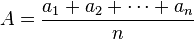
(arithmetic mean), 
(quadratic mean). Examples
- For any real x,
- If x > 0, then
- If x ≥ 1, then
- If x, y, z > 0, then
- For any real distinct numbers a and b,
- If x, y > 0 and 0 < p < 1, then
- If x, y, z > 0, then
- If a, b > 0, then
-
- This inequality was solved by I.Ilani in JSTOR,AMM,Vol.97,No.1,1990.
- If a, b > 0, then
-
- This inequality was solved by S.Manyama in AJMAA,Vol.7,Issue 2,No.1,2010 and by V.Cirtoaje in JNSA,Vol.4,Issue 2,130-137,2011.
- If a, b, c > 0, then
- If a, b > 0, then
-
- This result was generalized by R. Ozols in 2002 who proved that if a1, ..., an > 0, then
- (result is published in Latvian popular-scientific quarterly The Starry Sky, see references).
https://www.youtube.com/results?search_query=inequalities+questions&sm=1
- Click on start to begin the game ;)
http://www.mathx.net/multi-step-inequalities/








Hiç yorum yok:
Yorum Gönder